TERRA-Supported Research Presented at ICML 2026 in Seoul
TERRA-Supported Research Presented at ICML 2026 in Seoul
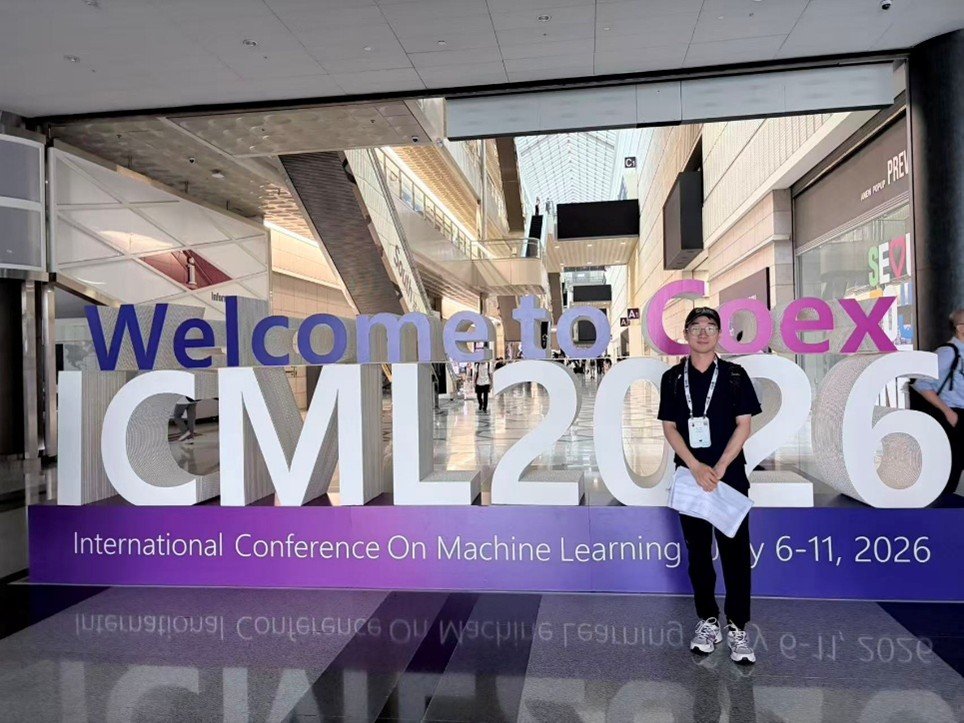
On 6 July 2026, researchers from the University of Glasgow (UGLA), a partner of the TERRA project, presented TERRA-supported research at the 43rd International Conference on Machine Learning (ICML 2026) in Seoul, Republic of Korea.
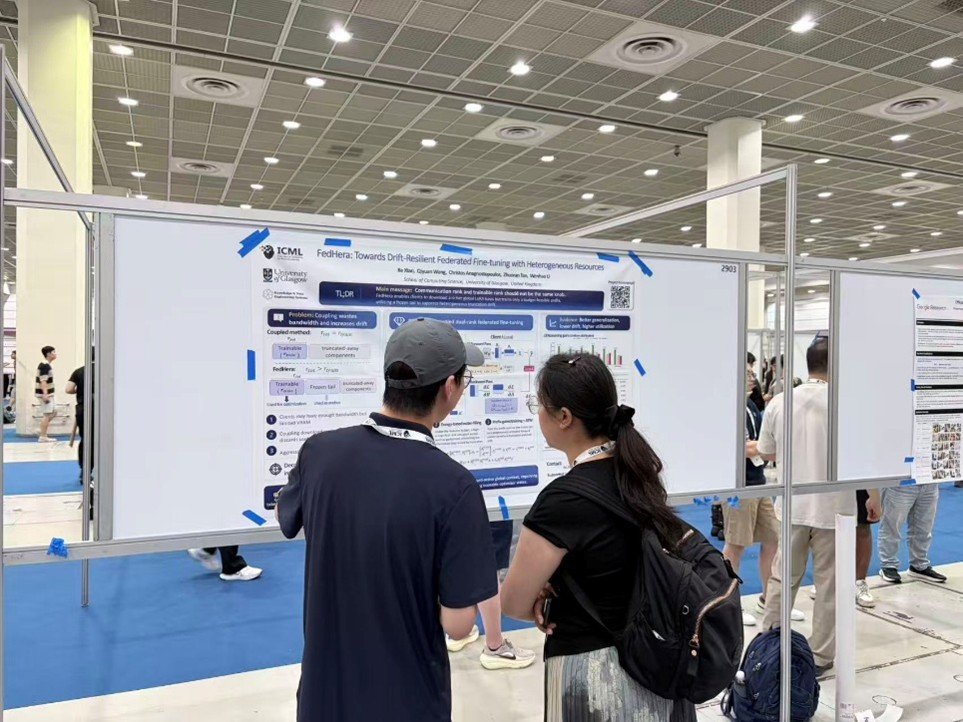
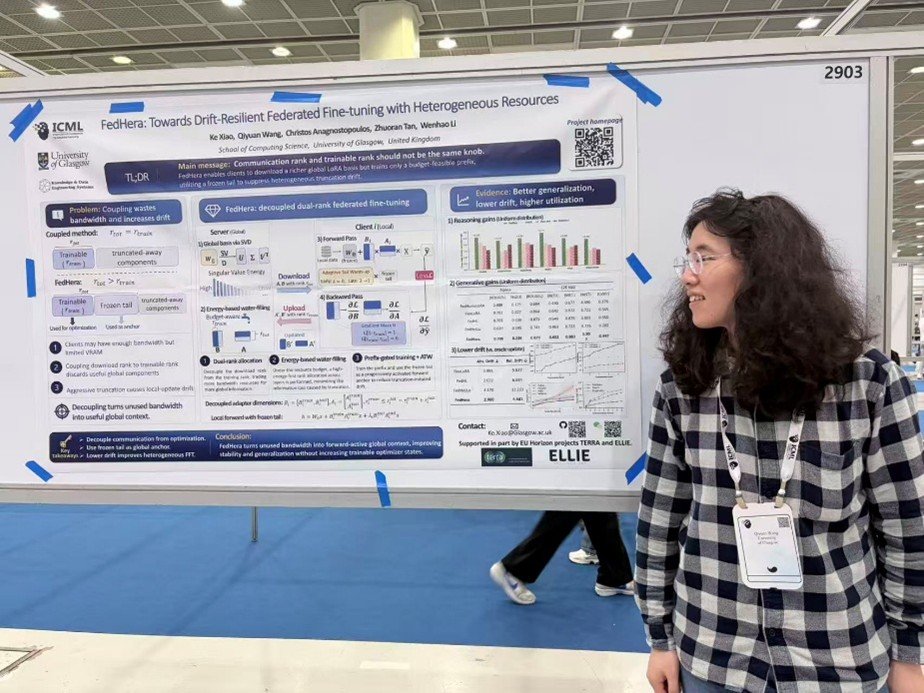
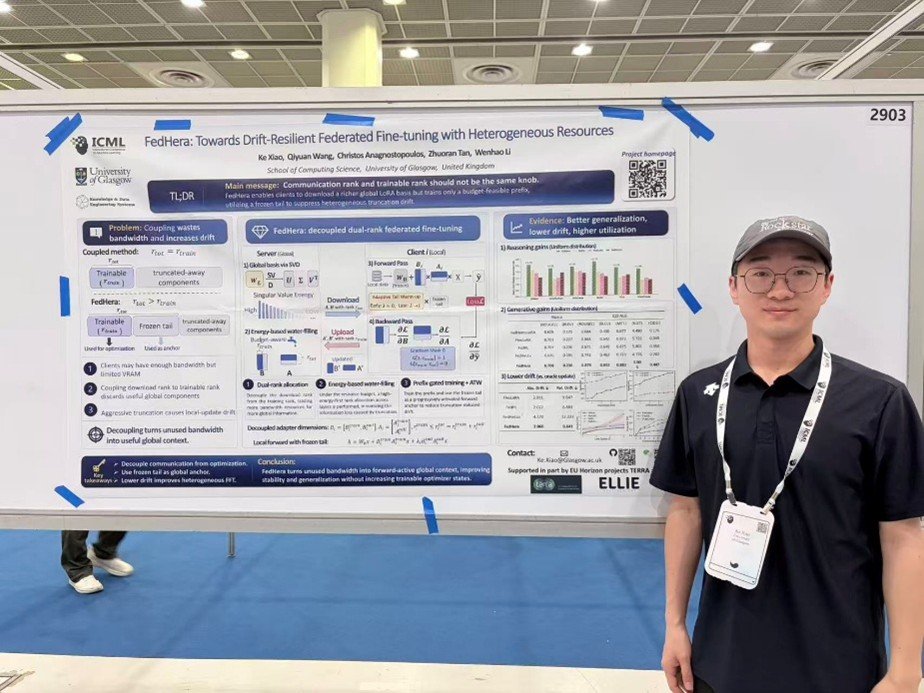
Ke Xiao and Qiyuan Wang presented the paper “FedHera: Towards Drift-Resilient Federated Fine-tuning with Heterogeneous Resources” through a dedicated poster session, engaging with researchers and professionals from the international machine learning community.
The paper investigates federated fine-tuning of large language models (LLMs) in environments where participating clients differ in terms of computational resources and tasks. FedHera addresses the challenges created by this heterogeneity, contributing to the development of more robust and resource-aware approaches for distributed model fine-tuning.
The poster presentation provided an opportunity to discuss the research with an audience of approximately 20 researchers, higher-education participants and industry professionals working in areas including machine learning, federated learning and large language models.
Explore the research:
Read the paper: “FedHera: Towards Drift-Resilient Federated Fine-tuning with Heterogeneous Resources” – University of Glasgow Research Repository
View the poster: “FedHera: Towards Drift-Resilient Federated Fine-tuning with Heterogeneous Resources” – ICML 2026 Poster
Connecting Federated Learning Research with TERRA
The FedHera research was partly supported by the TERRA project, making ICML 2026 an important international venue for disseminating TERRA-supported scientific work and strengthening the project’s links with the wider AI and machine learning research community.
The research contributes to a deeper understanding of Transformer-based models and the potential of federated learning to enable resource-aware fine-tuning across heterogeneous and resource-constrained edge devices. These insights are particularly relevant to TERRA’s exploration of advanced AI methods for distributed environmental and climate intelligence.
In particular, the methodological knowledge gained through this research may inform future distributed post-training approaches for intelligent coastal monitoring systems. It also provides theoretical and methodological support for investigating the integration of Temporal Fusion Transformer models into the forecasting components of TERRA Use Case 3.
Participation in ICML 2026 therefore supported not only the dissemination of TERRA-related research but also the exchange of knowledge with the international scientific community on emerging approaches to federated and distributed AI.
About ICML 2026
The International Conference on Machine Learning (ICML) is one of the leading international conferences in machine learning, bringing together researchers and practitioners to present and discuss advances across artificial intelligence, machine learning and related fields.
Through participation in high-level international scientific events such as ICML 2026, TERRA continues to promote knowledge exchange and strengthen the scientific foundations supporting its work towards AI-powered climate intelligence and more resilient environmental decision-making.