Reinventing what we can see from space with Copernicus services – featured in new article
The TERRA Horizon Project is featured in a recent article by Krishna Chandramouli (IEEE Senior Member and technology expert in Artificial Intelligence, Internet of Things, and space technologies), offering a forward-looking perspective on how emerging technologies are reshaping the way we observe, analyse, and understand our planet.
The article, titled “Reinventing what we can see from space”, explores the evolving role of Earth Observation (EO) in addressing global environmental challenges and enabling more informed, data-driven decision-making. It highlights how the increasing availability of satellite data, combined with advances in digital technologies, is opening new possibilities for monitoring complex environmental systems at scale.
Within this context, TERRA is presented as a representative example of how innovative approaches can unlock the full potential of EO data. The project brings together Copernicus services with Artificial Intelligence, Big Data analytics, and intelligent Digital Twins to deliver a new generation of tools for environmental monitoring and forecasting.
By integrating these technologies, TERRA aims to go beyond traditional observation methods, enabling continuous monitoring, predictive modelling, and more accurate assessment of environmental risks. This approach supports not only scientific analysis but also practical decision-making processes for public authorities, industry stakeholders, and environmental organisations.
The article also reflects on several key application areas that are central to the TERRA project’s work, including:
- Monitoring water quality and detecting pollution patterns across coastal and inland water systems
- Analysing coastal dynamics, including shoreline evolution and erosion processes
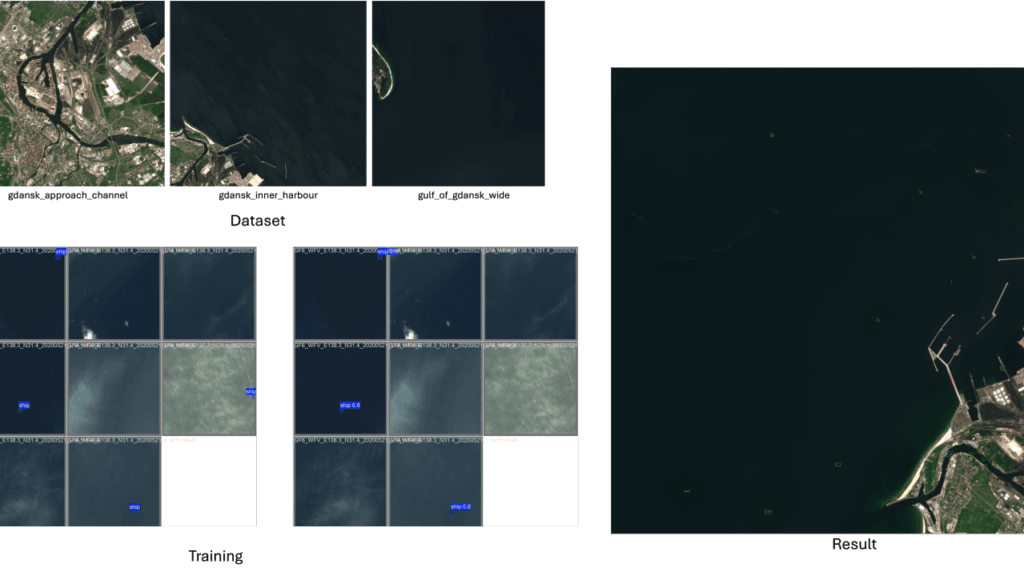
- Supporting environmental assessment and management in and around port areas and urban coastal zones
These use cases demonstrate how EO-based solutions can contribute to addressing real-world challenges, from climate change adaptation to sustainable coastal management.
A key strength of TERRA lies in its ability to combine heterogeneous data sources — including satellite imagery, in situ measurements, and historical datasets — with advanced modelling techniques. Through this integration, the project aims to deliver actionable insights that can support early warning systems, improve forecasting accuracy, and enhance resilience to environmental risks.
Beyond its technical contributions, the article also underlines the broader importance of initiatives like TERRA in advancing the European and global EO ecosystem. By fostering collaboration across research, industry, and policy communities, such projects play a key role in accelerating innovation and ensuring that technological developments translate into tangible societal impact.
This feature contributes to increasing the visibility of the TERRA project and highlights the importance of continued investment in Earth Observation and digital technologies to better understand and protect our environment.
You can read the full article here.