
TERRA Showcases Copernicus-Powered Environmental Intelligence at ESA Environmental Crimes Workshop 2026
29 September – 1 October 2026 | Frascati, Italy
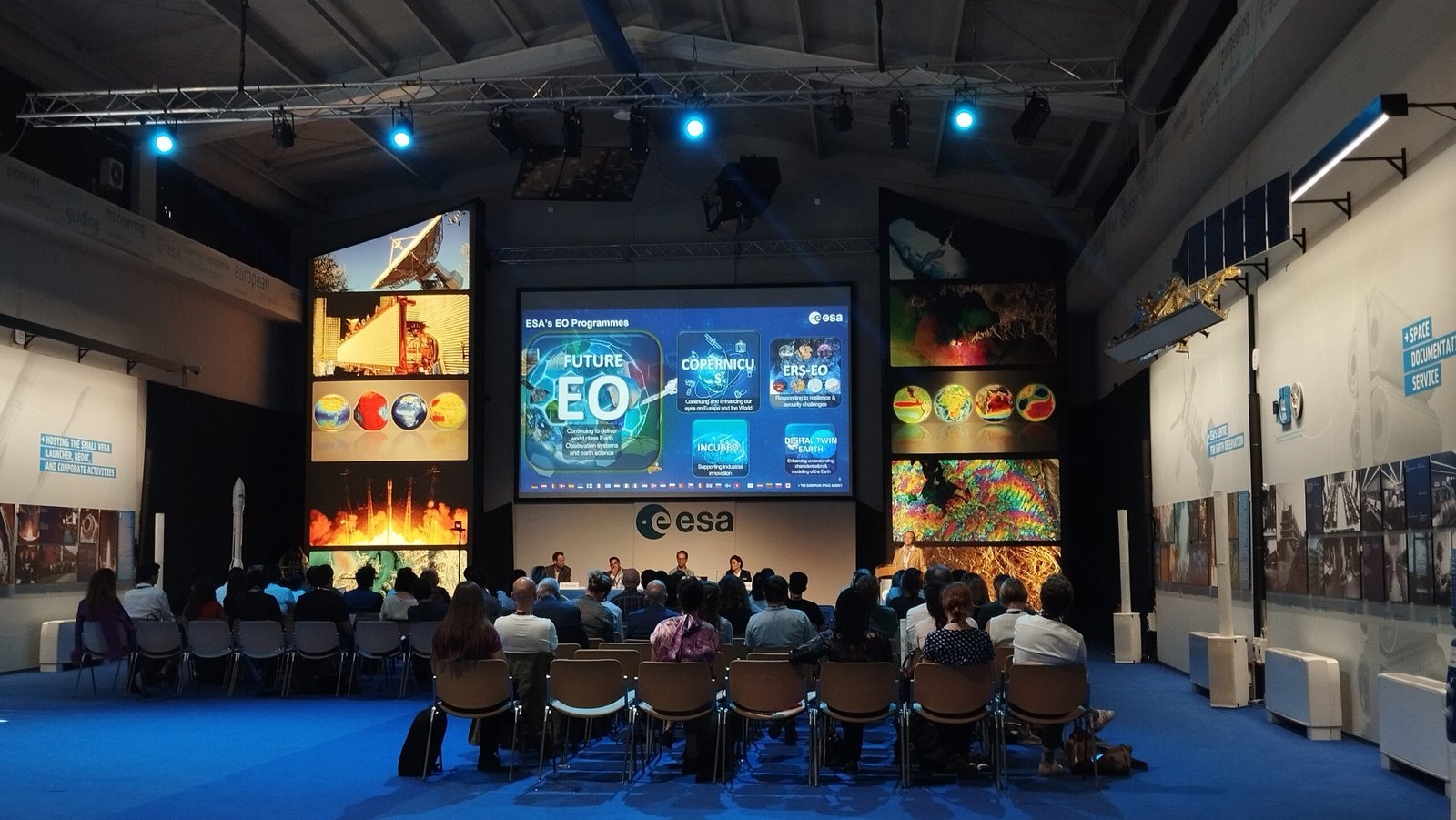
The TERRA Horizon Europe project was represented by the University of Thessaly (UTH) at the 2nd Environmental Crimes Workshop, jointly organised by the European Space Agency (ESA), the European Commission’s Joint Research Centre (JRC), and the United Nations Office on Drugs and Crime (UNODC). The event took place at ESA-ESRIN in Frascati, Italy, bringing together international experts to explore how Earth Observation technologies can support the detection, monitoring, and investigation of environmental crimes.
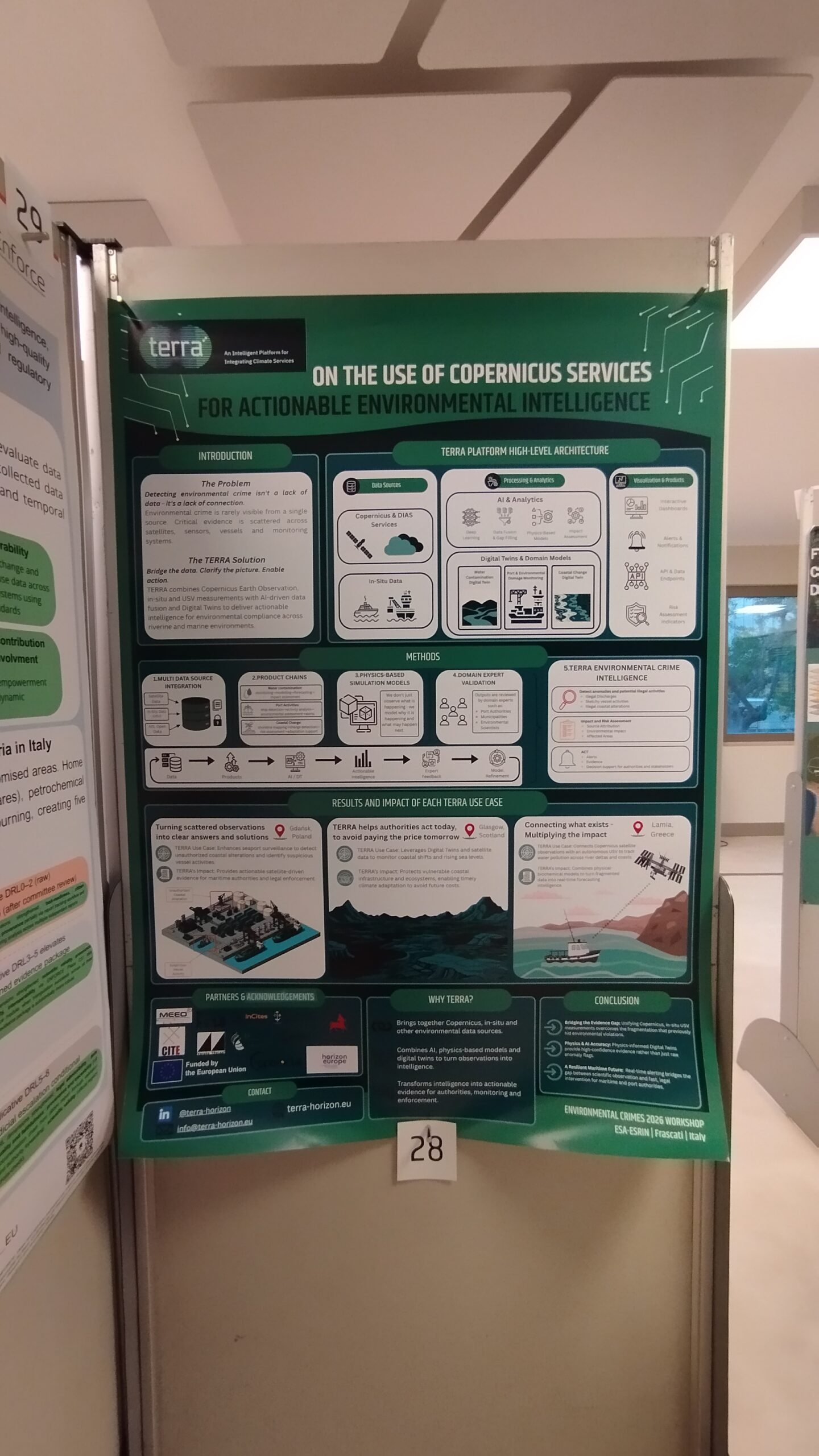
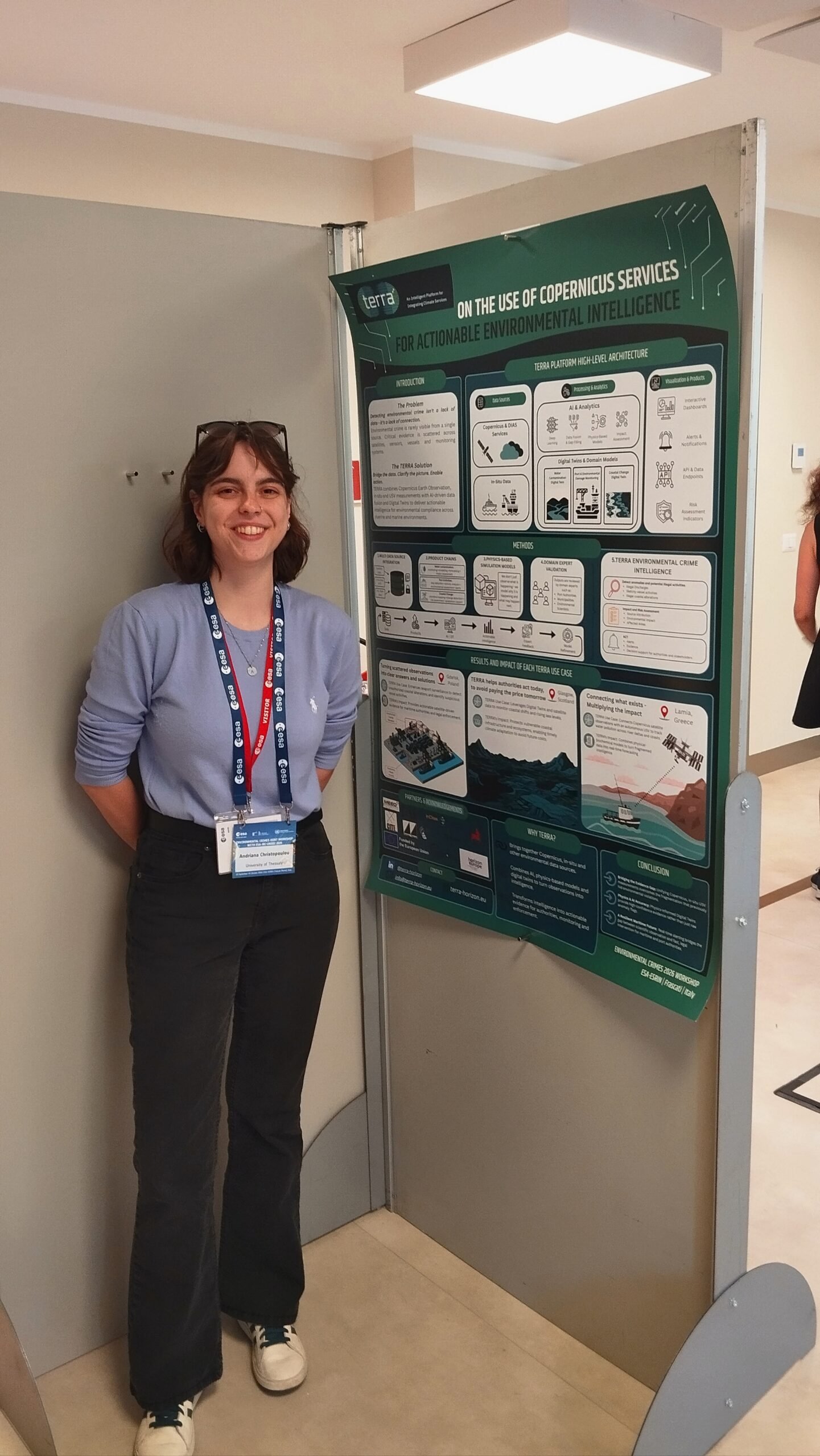
During the workshop, the UTH team presented a scientific poster entitled “On the Use of Copernicus Services for Actionable Environmental Intelligence”, introducing the high-level architecture and methodological framework of the TERRA Platform.
The presentation demonstrated how TERRA aims to bridge fragmented environmental information by integrating Copernicus Earth Observation data, Data and Information Access Services (DIAS), and in-situ measurements into a unified analytical framework.
By combining AI-driven data fusion, physics-based simulation models, and Digital Twin technologies, the platform aims to transform raw satellite observations into reliable, actionable environmental intelligence.
Particular emphasis was placed on three application areas:
- River contamination: Supporting the identification and assessment of pollution events in riverine environments.
- Port environmental damage: Enhancing the monitoring and assessment of environmental impacts in port areas.
- Coastal changes: Analysing shoreline dynamics and coastal shifts through integrated Earth Observation and modelling capabilities.
These applications demonstrate TERRA’s potential to strengthen environmental monitoring and support evidence-based decision-making.
The workshop attracted approximately 100–150 participants, including Earth Observation specialists, remote-sensing practitioners, legal scholars, environmental lawyers, and regulatory compliance experts.
The poster session created opportunities for discussions on how physics-informed Digital Twins, environmental monitoring technologies, and real-time alerting systems could contribute to legal and regulatory workflows.
A central topic of discussion was the challenge of translating scientific observations into environmental intelligence that can support regulatory assessments and enforcement decisions.
Through these exchanges, TERRA highlighted the importance of connecting advanced technological capabilities with the practical needs of environmental authorities and compliance stakeholders.
Participation in the ESA Environmental Crimes Workshop provided an important opportunity to present TERRA’s ongoing developments to a specialised international audience.
The activity contributed to the project’s dissemination, stakeholder engagement, and future exploitation objectives by increasing awareness of its integrated approach to environmental intelligence.
It also reinforced TERRA’s broader vision of combining Copernicus services, autonomous unmanned surface vehicle (USV) measurements, in-situ sensing, AI analytics, and Digital Twins to support more effective environmental monitoring across marine, coastal, and riverine environments.