TERRA Partner Interview – University of Thessaly
About Your Organisation & TERRA Role
Can you briefly introduce your organisation — mission, expertise, and core activities?
The University of Thessaly was founded in 1984 and its administrative and academic centre is located in the city of Volos. Since then, the University of Thessaly has gradually grown with new departments in the Greek cities of Volos, Larissa, Trikala, Karditsa and Lamia. Today, the University of Thessaly, with 37 Departments and 8 Schools, is the third largest university in Greece, with its own identity and a prominent position in the Greek national educational system.
The Department of Informatics and Telecommunications is located in the city of Lamia. It was created to cover important research areas such as security, data management, augmented reality and computational intelligence. Through the continuous development of its curriculum, the Department remains closely connected with academia and industry, offering students up-to-date knowledge in key areas of Computer Science.
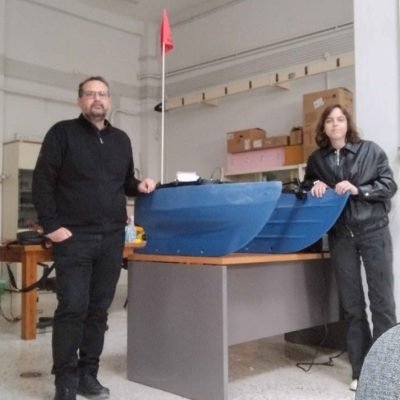
UTH participates in the project with the Intelligent Pervasive Systems (iPRISM – www.iprism.eu) and RCS Lab research groups.
The iPRISM (Intelligent Pervasive Systems) research group conducts research on distributed intelligence applications in the following core domains:
- Artificial Intelligence
- Applied (deep) Machine Learning
- Computational Intelligence
- Distributed Intelligence
- Pervasive Computing
- Pervasive Data Science
- Pervasive Edge Computing
- Proactive Decision Making
- Applications for Distributed Systems, Internet of Things, and Edge/Cloud
- Computing
- Predictive Intelligence
- Large-scale Data Management
The team’s expertise spans a wide range of theoretical models and practical applications aimed at providing intelligence across various application domains. Our researchers focus on developing innovative context-aware systems and applications that support the autonomous behaviour of software components used in distributed systems, the Internet of Things, Edge Computing, and data management.
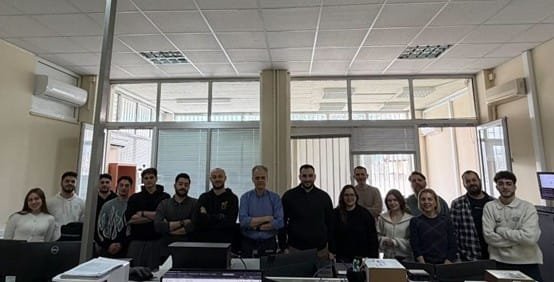
Areas of research activity for the RCS (Robotics & Control Systems) Lab include:
- Robotics
- Automatic Control & Automated Processes
- Fault Diagnosis & Fault Tolerant Control
- Control of Robotic Vehicles (marine, aerial, ground)
- Simulation of Complex Robotic Systems
- Intelligent Control & Control with Visual Feedback
- Hybrid Systems
- Systems Modeling and Identification
- Data Fusion & Sensors
- Multi-Agent Systems
- Mechatronic Systems
- Programmable Logic Controllers
- Systems Reliability Analysis
- Air Traffic Management Systems
- Real-Time Systems
RCS Lab has significant expertise in the fields of:
- Underwater Robotics
- Mobile Robotic Platforms
- Unmanned Aerial Vehicles
- Multi-agent Autonomous Vehicles
Team members are active in research on:
- Fault Diagnosis of Sensors and Actuators
- Fault Accommodation
- Fault-Tolerant Control of Autonomous Systems
What motivated your organisation to join the TERRA Horizon project?
UTH and the participating research groups have long experience in the subjects addressed by the TERRA project. TERRA represents an ideal scenario where this expertise can be applied, especially when considering the use of unmanned vehicles for data collection and the adoption of advanced AI models for data processing in order to produce knowledge that can help solve various environmental problems.
Data processing also includes satellite data combined with in-field measurements, creating powerful models that are fully aligned with real-world conditions.
What specific role or responsibilities does your team have within TERRA?
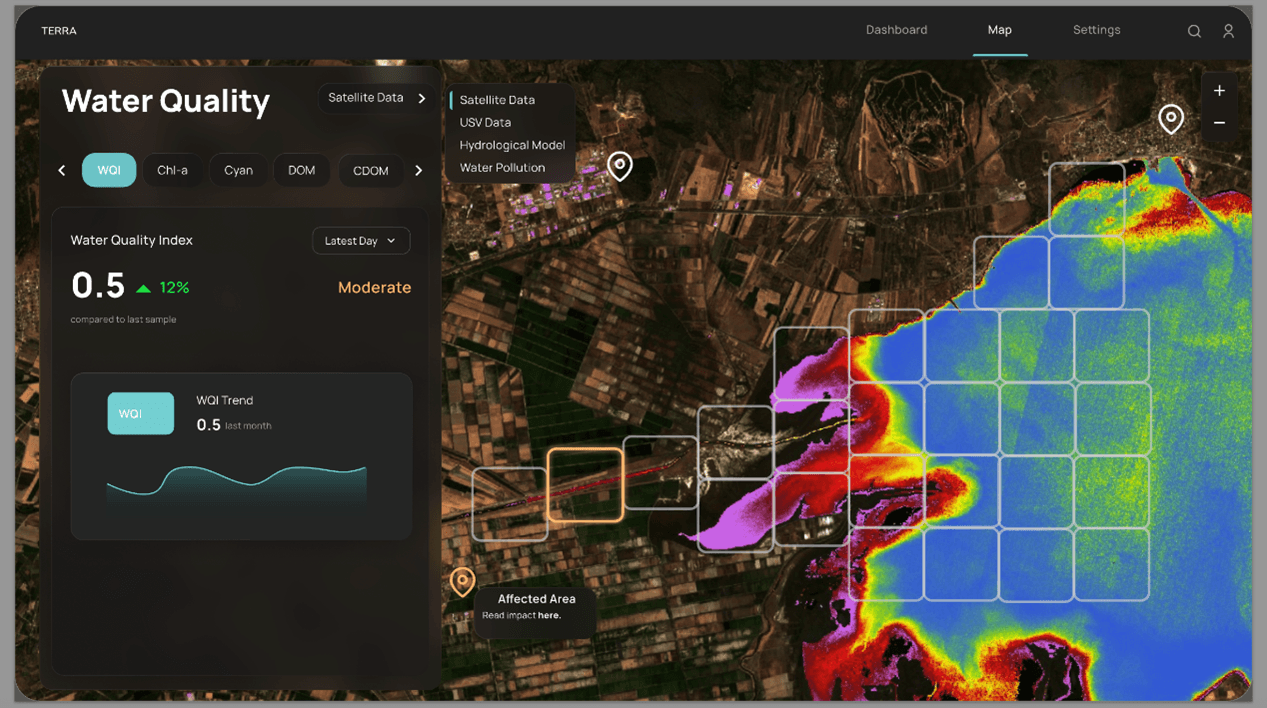
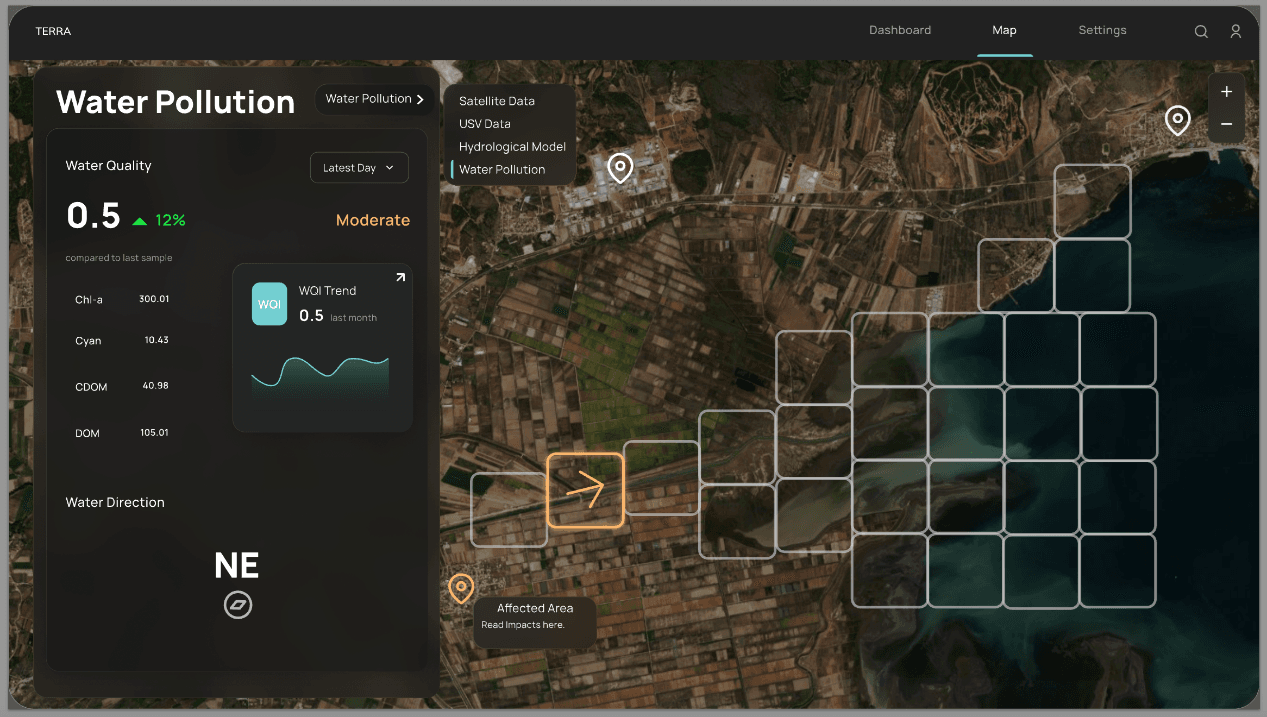
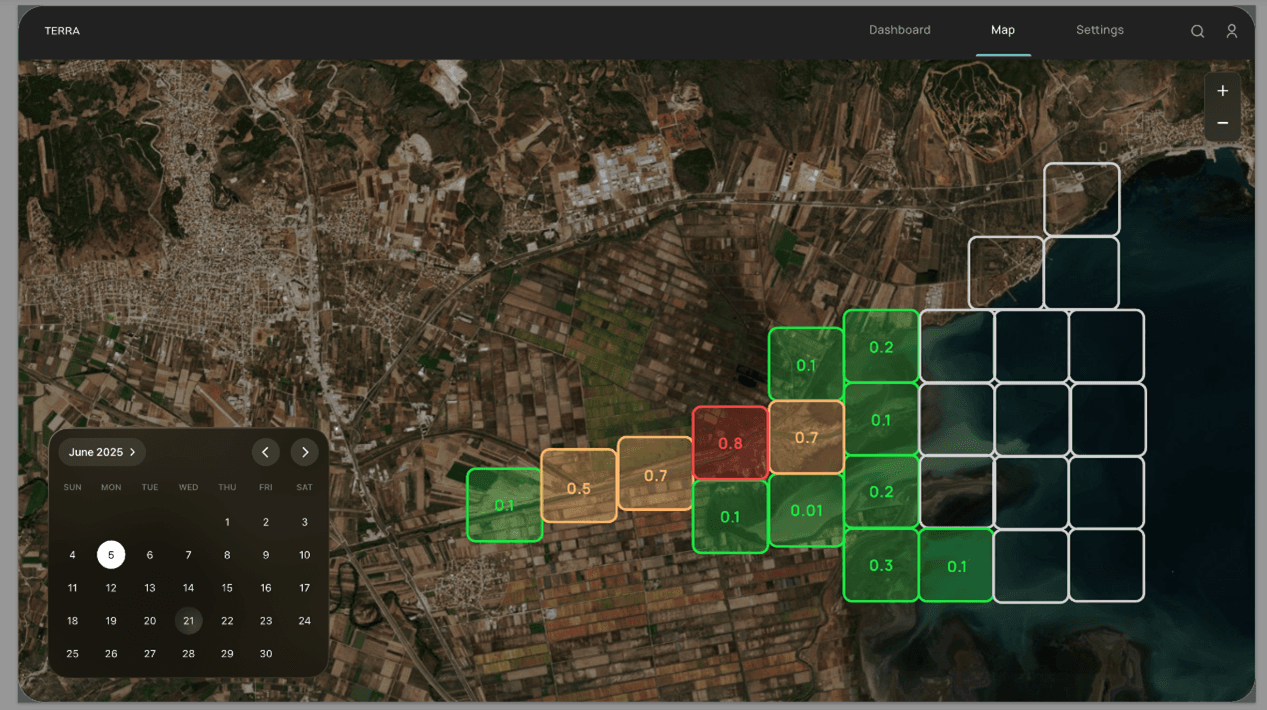
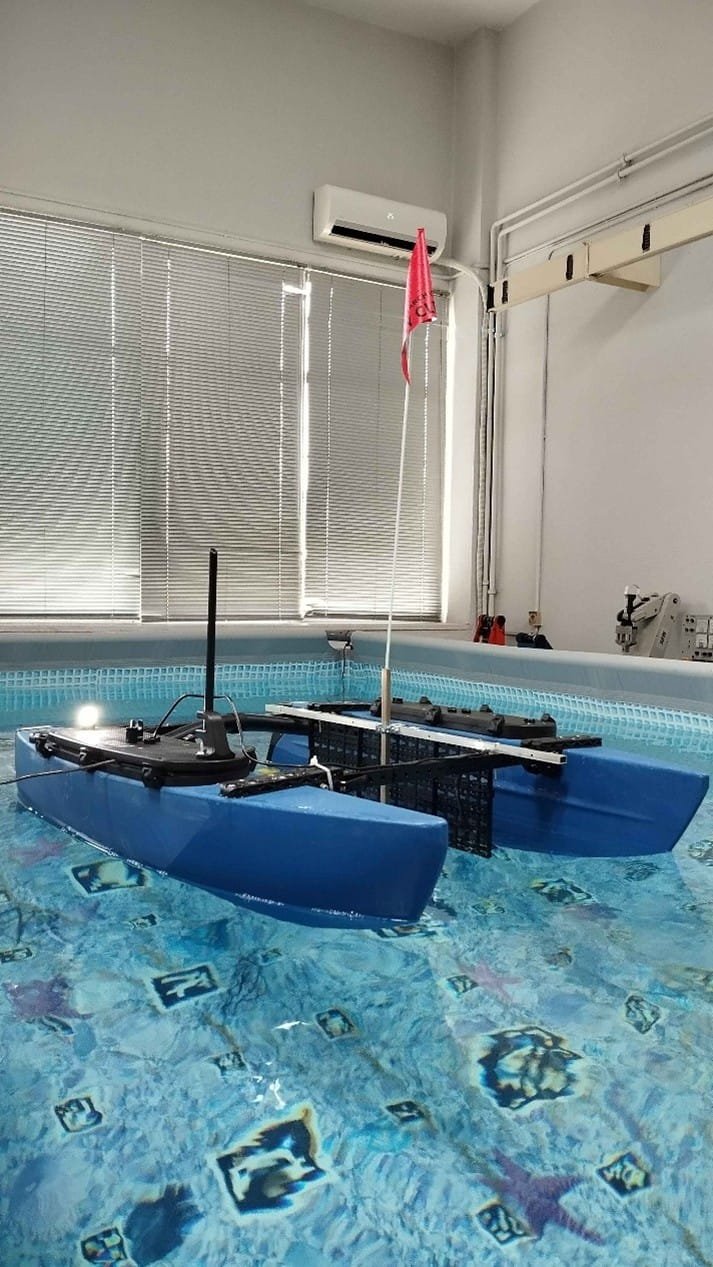
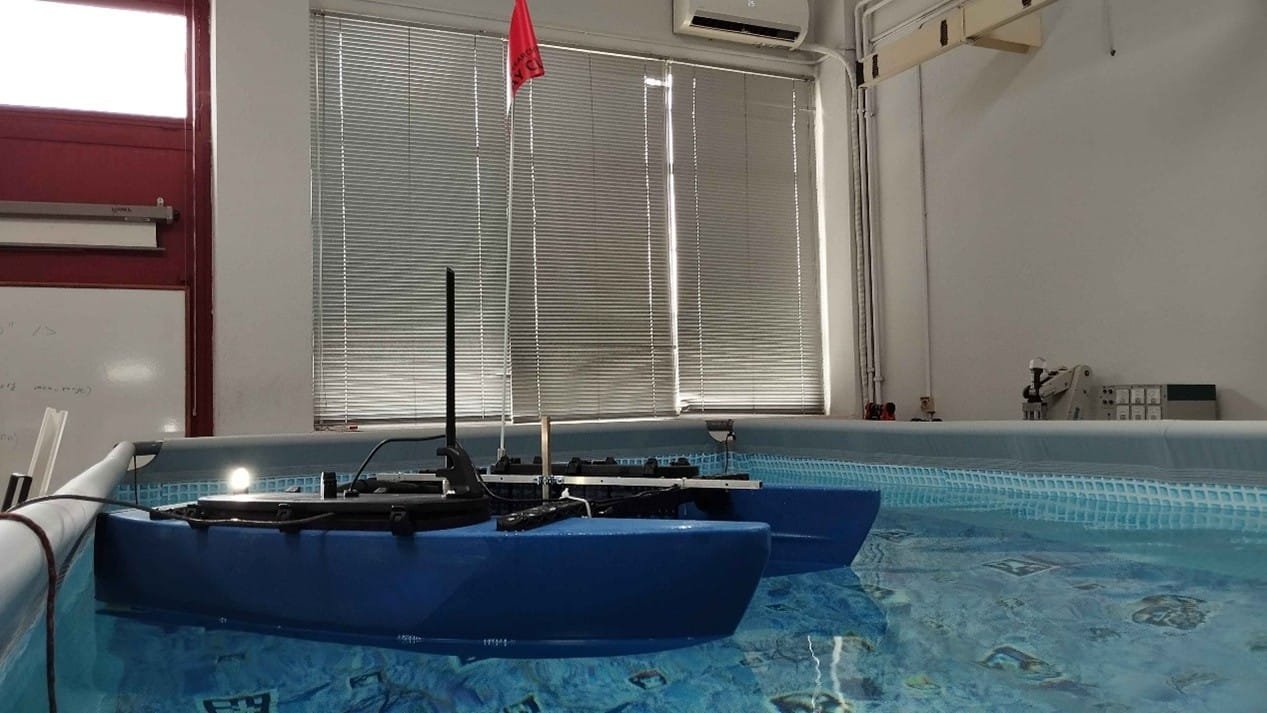
UTH is the Coordinator of the project and contributes to the development of AI models, while also supporting the Greek demonstrator, which focuses on detecting pollution levels and their spread in a Greek river.
Which TERRA work packages or key activities are you primarily involved in?
As UTH is the Coordinator of the project and one of the core technical partners supporting implementation activities, we participate in all Work Packages.
TERRA’s Mission & Your Contribution
How would you describe TERRA’s main mission to someone unfamiliar with the project?
In simple terms, TERRA collects large volumes of satellite data and in-field measurements and performs advanced processing using AI models to deliver solutions for various environmental monitoring and land management challenges.
Through the platform, we gain access to Copernicus data in multiple formats, integrate them, and apply the developed AI models to generate results. This allows us to monitor and detect pollution levels in specific scenarios, identify changes in coastlines and detect illegal activities in harbours.
What specific part of TERRA’s objectives resonates most with your expertise or work?
The development of advanced AI models for Copernicus data processing.
Can you explain how your contribution supports AI-driven climate services or digital modelling within TERRA?
The envisioned AI models are capable of processing both satellite and in-field data, enabling the support of services related to climate change monitoring.
Representative examples include use cases where pollution levels and coastline changes can be detected and predicted, generating knowledge that supports environmental monitoring and decision-making.
Innovation & Technical Impact
TERRA works at the intersection of Copernicus services and cutting-edge technologies — how does your work contribute to this innovation?
We provide intelligent algorithms based on advanced AI models that facilitate data processing, knowledge extraction and continuous monitoring of environmental phenomena. Our work lies at the core of the intersection between AI models, Digital Twins and data integration/fusion.
What advanced methods, tools, or technologies are you using in TERRA?
We adopt advanced deep learning models for image and time-series data processing, regardless of whether these data originate from satellites or other sources.
What do you see as the most groundbreaking or unique contribution your organisation brings to the project?
Our expertise in the implementation of advanced AI models for image and time-series data processing.
Real-World Use and Use Case Impact
How is your work being tested or applied in real settings?
Our work will be integrated into the envisioned demonstrators, combined with other modules developed by the consortium.
Can you describe a use case where your results might directly help stakeholders?
UTH directly supports the Greek demonstrator, where we will be able to detect and monitor pollution levels and their spread in a Greek river. This knowledge is valuable for public authorities and citizens, helping to support strategic decisions regarding future environmental management.
Have you seen early indications of impact from your TERRA activities?
Not yet, as the implementation and results are still in the early stages.
Collaboration & Consortium Experience
How has collaboration within the TERRA consortium been so far?
The collaboration so far has been excellent.
What have you learned from other partners since joining TERRA?
We observe the expertise of other partners and combine it with our own, allowing us to expand our research horizons.
What makes cross-disciplinary collaboration valuable in TERRA?
Both technical actors and domain experts can exchange perspectives on the targeted problems, which leads to more efficient results and implementation activities that are closely aligned with real-world needs.
Outreach, Visibility & Stakeholder Engagement
Why is communicating project outcomes important?
Communication and exploitation of TERRA results are very important in order to demonstrate the development and advantages of the solutions when they are applied in real scenarios.
Have you been involved in any outreach activities?
Yes. We have disseminated the project at various events and prepared publications presenting the current implementation activities.
How might your organisation use TERRA outcomes for dissemination?
The results will become part of our research portfolio, being disseminated through our MSc and PhD programmes and potentially exploited through UTH spin-offs.
Vision & Long-Term Impact
What impact do you hope TERRA will have?
We envision TERRA as a platform where interested stakeholders can access services and products, gain knowledge, and support decision-making.
How do you see TERRA’s outcomes being sustained beyond the project?
The platform can become the core of exploitation activities where multiple services are offered. Users will be able to access these services to gain knowledge, while technical actors will be able to upload new services, creating an ecosystem of intelligent solutions built on Copernicus data.
Why is a project like TERRA important for climate change adaptation?
The dynamic nature of climate change requires ICT tools equipped with AI capabilities in order to monitor evolving phenomena and support proactive decision-making.
IPRISM Research Group
RCS Lab